Healthcare documentation: build vs. buy strategy
A clear-eyed build-vs-buy read for clinical documentation — weighing speed, cost, compliance, and control before committing.
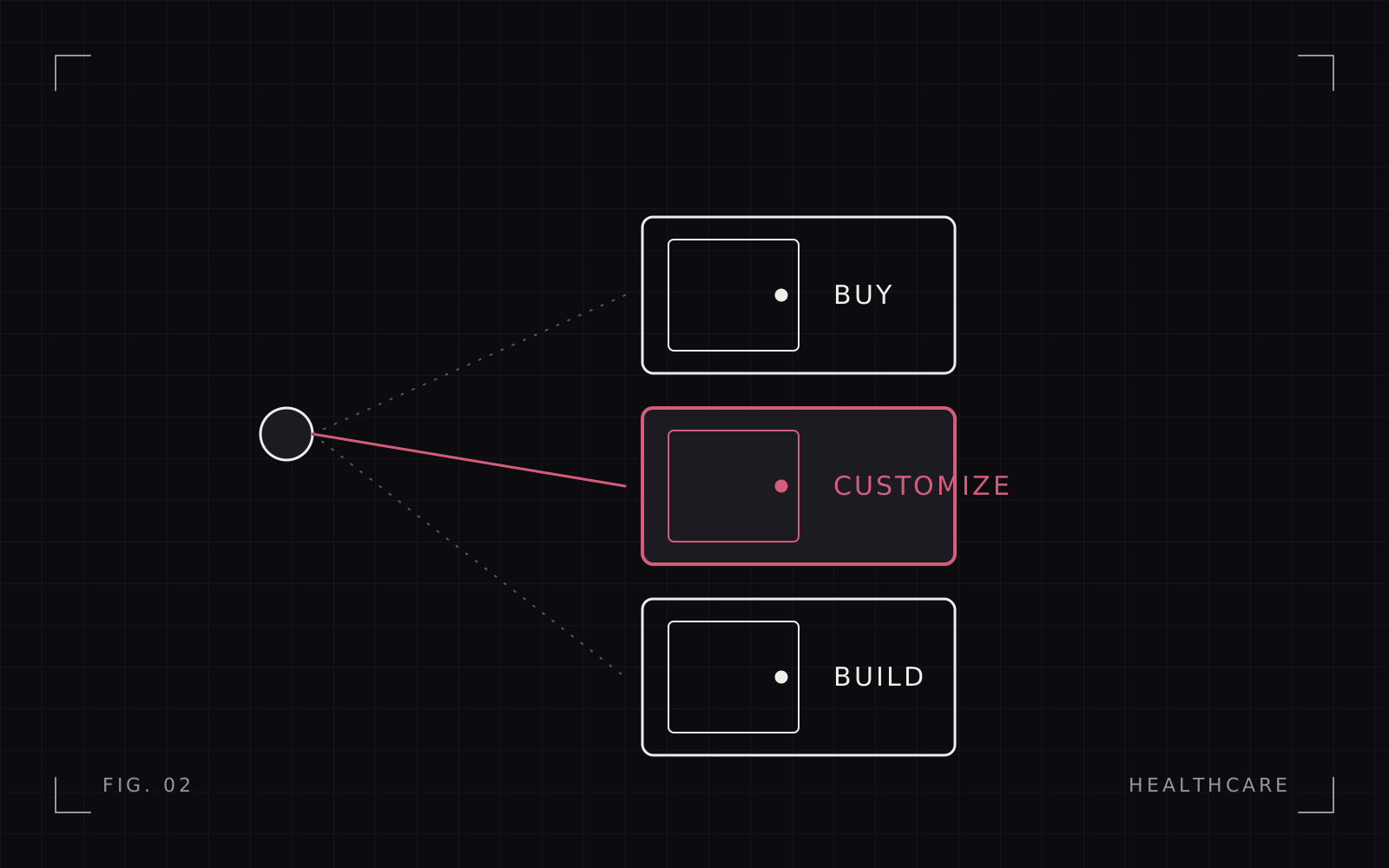
A healthcare provider weighing whether to adopt an off-the-shelf AI documentation tool or build something more tailored in-house.
The problem
They wanted to ease the documentation load on clinicians, but they weren't convinced a generic AI scribe would actually match their workflow, their compliance obligations, their payer requirements, or their internal standards.
Leadership needed a clear-eyed read on the tradeoffs — speed versus cost versus compliance versus how much they could customize.
What we explored
We framed it as three doors: buy an existing AI scribe or documentation tool, customize an existing tool to fit the organization's workflow, or build a more tailored internal documentation system.
We pushed the conversation toward the things that actually decide success — whether providers would adopt it, where the compliance risk sat, how it would plug into existing systems, how hard the build would be, and how much long-term control they'd retain over the product.
The solution
A documentation assistant that could:
- 01Capture clinician notes
- 02Generate structured summaries
- 03Hold to internal documentation standards
- 04Cut down on repetitive charting
- 05Make sure required fields got filled in
- 06Keep notes consistent across care teams
- 07Leave a human in the loop for the final read
Impact
The goal was to keep them from buying a tool that dazzled in the demo and fell apart by week two. With the build-vs-buy picture laid out clearly, they could make the call with their eyes open.
Why this matters
In healthcare, the AI decision is rarely about the AI. It's about whether the thing fits the workflow, clears compliance, gets adopted, and genuinely makes a clinician's day easier.