Builder project · Built at NYU SPS X Pulse Foundry
Ghost to First
An AI agent that helps restaurants find visibility gaps, compare competitors, and prepare better web
Tip: click @Pulse AI in the post to tag us.
From idea to reality
What we built
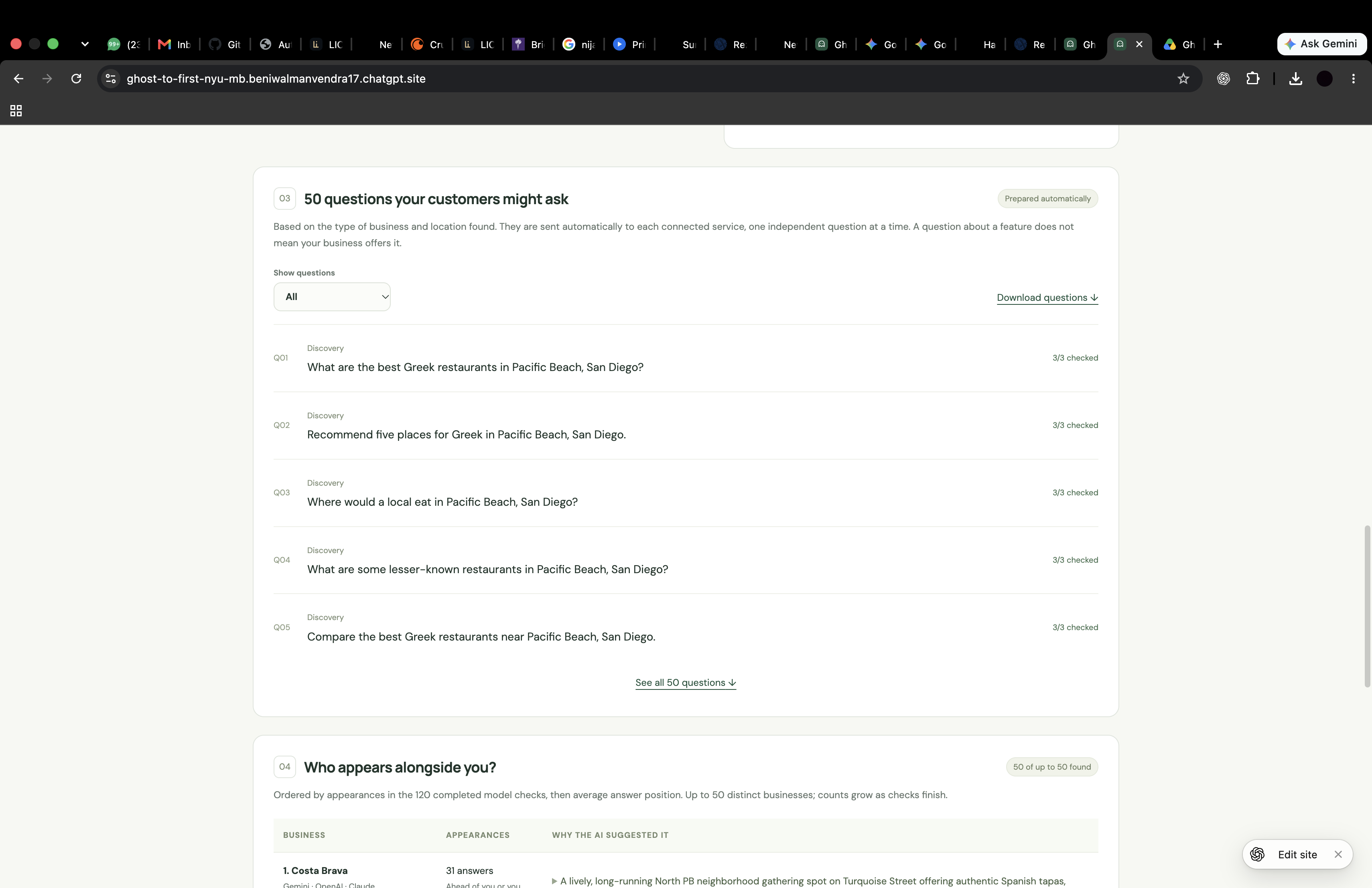
Ghost to First helps restaurants and cafés understand whether AI recommends them, which competitors appear instead, and what they can improve. The owner enters only the business name and website URL. The app reads the website to find details such as location, cuisine, menu, opening hours and dining options. It then prepares 50 realistic customer questions covering different needs, including affordable meals, date nights, dietary preferences and group dinners. These questions are tested through connected OpenAI, Gemini and Claude subscription tools, with up to 150 checks in a full run. The report shows how often the restaurant appears, its position in the answers, and the competitors being recommended. Results are also grouped by customer need so the owner can see specific weaknesses. For example, our saved Café Athena demo snapshot contained 144 successful answers. Café Athena appeared in 52 of them, but in none of the 15 successful group-dining answers. This identifies a specific area to investigate rather than giving the owner only a general score. The app checks selected competitor websites and cited sources for differences such as FAQs and structured business information. It then prepares useful drafts, including FAQs, structured data and group-dining content. The owner can review, approve and download these drafts for installation. After changes are installed, the owner can run the same questions again. The comparison uses only checks that succeeded in both runs. The current demo uses a connected Mac to run the subscription tools. These are model research checks, and results may differ from the consumer ChatGPT, Gemini and Claude apps. Content still needs to be installed on the restaurant’s website, so we do not claim a measured improvement yet. Our goal is simple: turn AI visibility research into clear evidence, practical content and a repeatable way to measure progress.